
Source: Louisiana First News
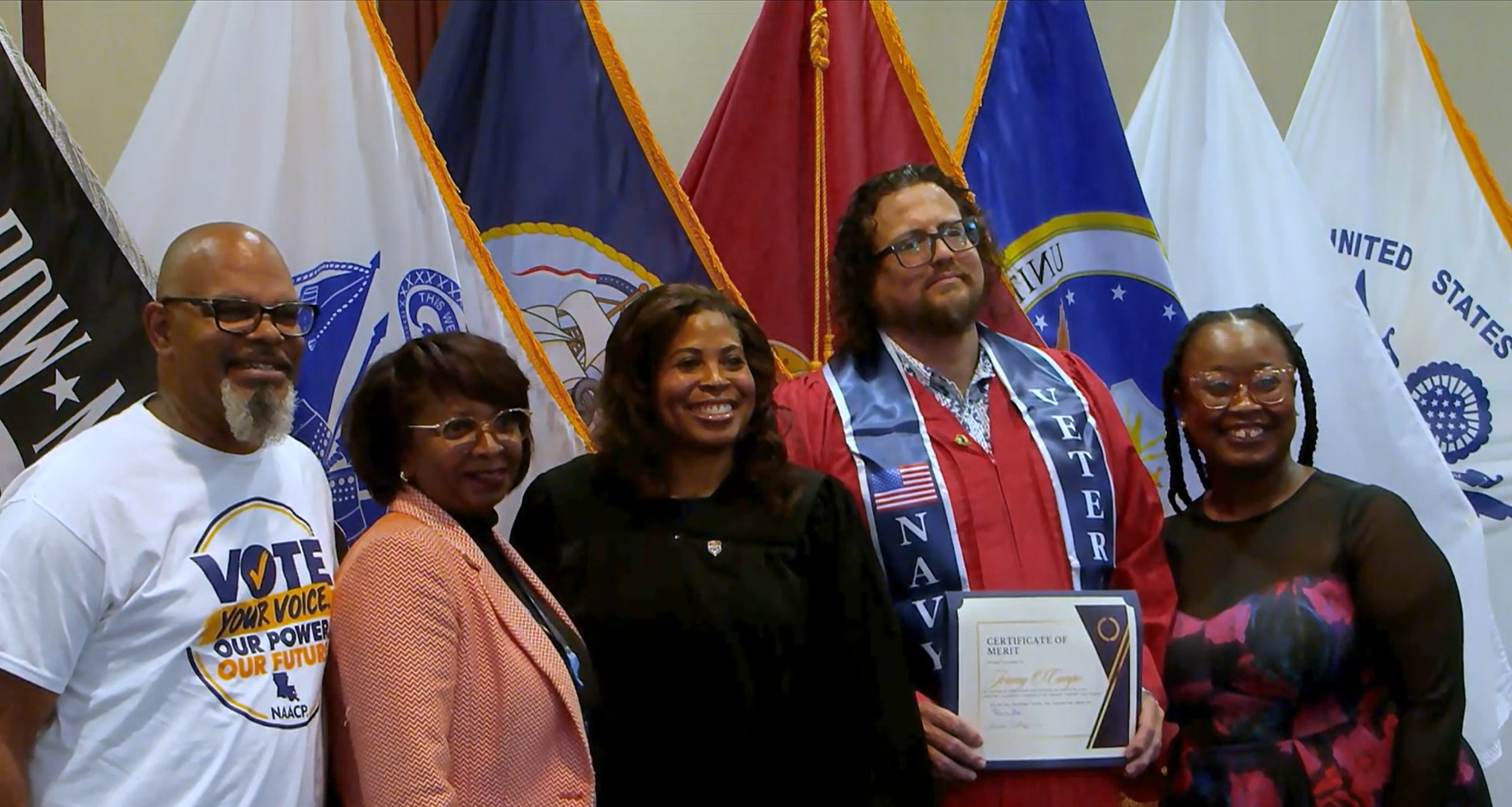
BATON ROUGE, La. (Louisiana First) — After 20 years in the military and decades battling alcohol addiction, Jeremy Ocampo is beginning a new chapter.
Ocampo graduated Thursday from the 19th Judicial District Court’s Veterans Treatment Court, a program designed to help justice-involved veterans address substance use and mental health challenges through treatment and accountability rather than traditional incarceration.
Ocampo said alcohol became a way to cope with the transition out of military service. After serving for 20 years and completing multiple deployments, he struggled to adjust to civilian life.
“I drank to cope, to be able to go to sleep, to be able to wake up, to be able to talk to people,” Ocampo said. “So now that that’s out of my life, I’m able to do that without alcohol.”
Ocampo said he struggled with alcohol for 30 years before realizing he needed help. After two DUI arrests, he turned to Veterans Treatment Court for structure and support.
The program required him to attend court regularly, undergo treatment and remain accountable throughout his recovery.
“I’ve been in this program for a year and a half, and now everything is going to be expunged. This chapter I can close and keep moving forward,” Ocampo said.
Judge Eboni Johnson-Rose with the 19th Judicial District Court said the program addresses underlying issues that can contribute to criminal behavior, including substance use and mental health challenges.
“It’s an intensive treatment program, and it’s designed to treat the underlying illnesses of why people commit crimes that they do,” Johnson-Rose said.
The Veterans Treatment Court launched in 2022 to provide justice-involved veterans with specialized services. Participants receive substance use treatment, mental health services, supervision and support from community partners.
Jimecia Williams, the program coordinator, said Ocampo’s progress makes his graduation especially meaningful. She said he has worked through addiction and mental health challenges while reconnecting with his family and finding employment.
“To see his journey with his addiction and his mental health, reconnecting with his family, getting his job — all of these things make this day so much more special because we were able to serve someone who served our country,” Williams said.
Ocampo said one of the biggest challenges was learning to live without alcohol after relying on it for so many years.
He also said the program helped him understand the importance of having a support system and a sense of purpose after leaving the military.
For Ocampo, family became a major motivation to complete the program. He said he wants to spend more time with his two daughters and grandchildren.
“I need to take care of me first. And then once I took care of me, then I could take care of somebody else,” Ocampo said.
Ocampo is also working toward expungement of qualifying criminal records. Johnson-Rose said the court is working to complete the paperwork for his expungement in the coming weeks.
Williams said the program will remain in contact with Ocampo for three to six months after graduation to help him transition into life outside the court program.
Veterans who meet program requirements can be referred through their court-appointed attorney, the public defender’s office or a private attorney.
SOURCE: Louisiana First News